The seat is the part of a bar stool that fails first. The frame can be rated for a decade of daily use, but if the seating surface cracks, peels, or stains in the first busy season, the whole stool looks tired and you are buying again. Choosing the seat material is therefore the decision that most determines whether a stool is a three-year purchase or a ten-year one. This comparison lines up the five materials you will actually be quoted, judged on the specs that matter: abrasion resistance, cleanability, comfort, and cost.
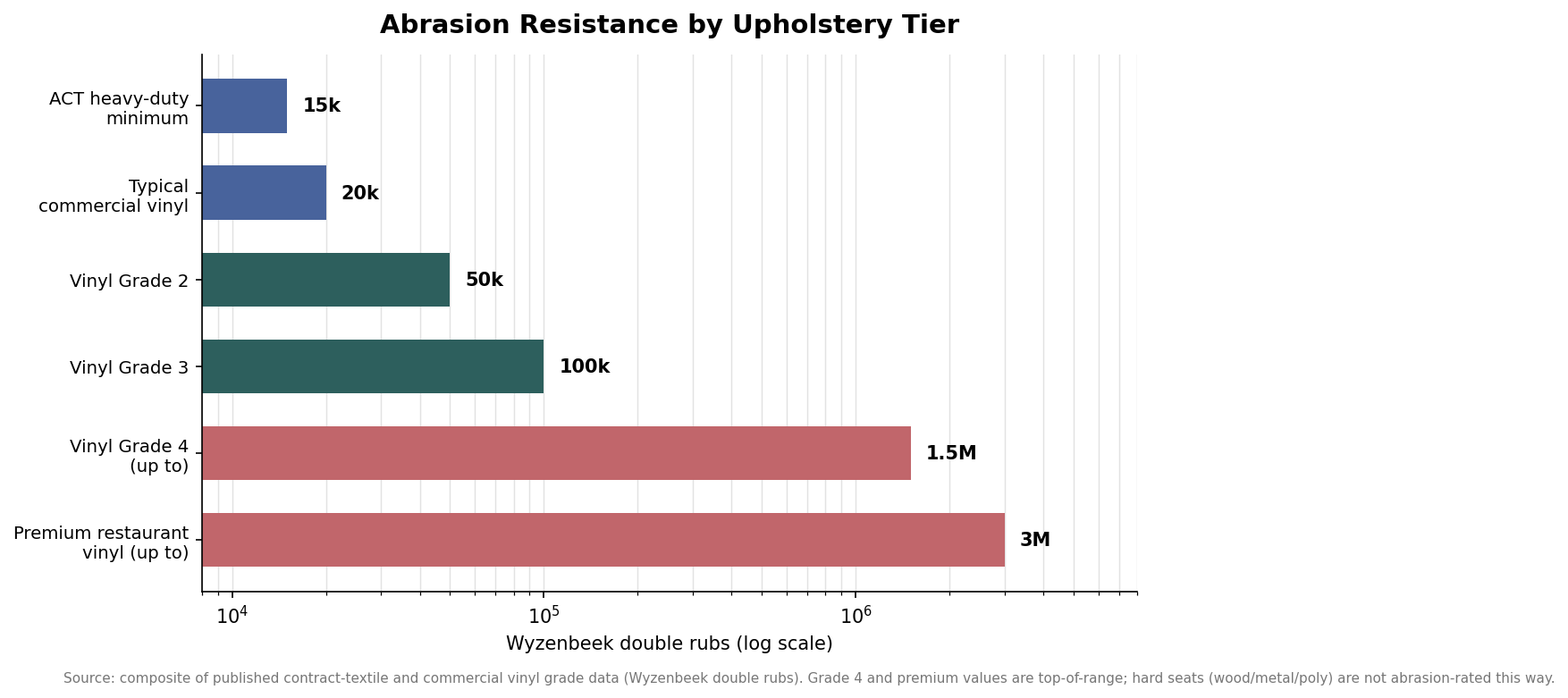
Before comparing anything, it helps to have one yardstick. For upholstered surfaces the industry uses the Wyzenbeek test, which counts double rubs until the fabric or vinyl shows wear. The Association for Contract Textiles sets 15,000 double rubs as the heavy-duty minimum for commercial upholstery, and that number is the floor, not the target. Good commercial vinyl clears it many times over. Hard surfaces like wood and metal are not abrasion-tested this way because there is no coating to rub through, which is a clue about where they fit.
Commercial vinyl: the default for a reason
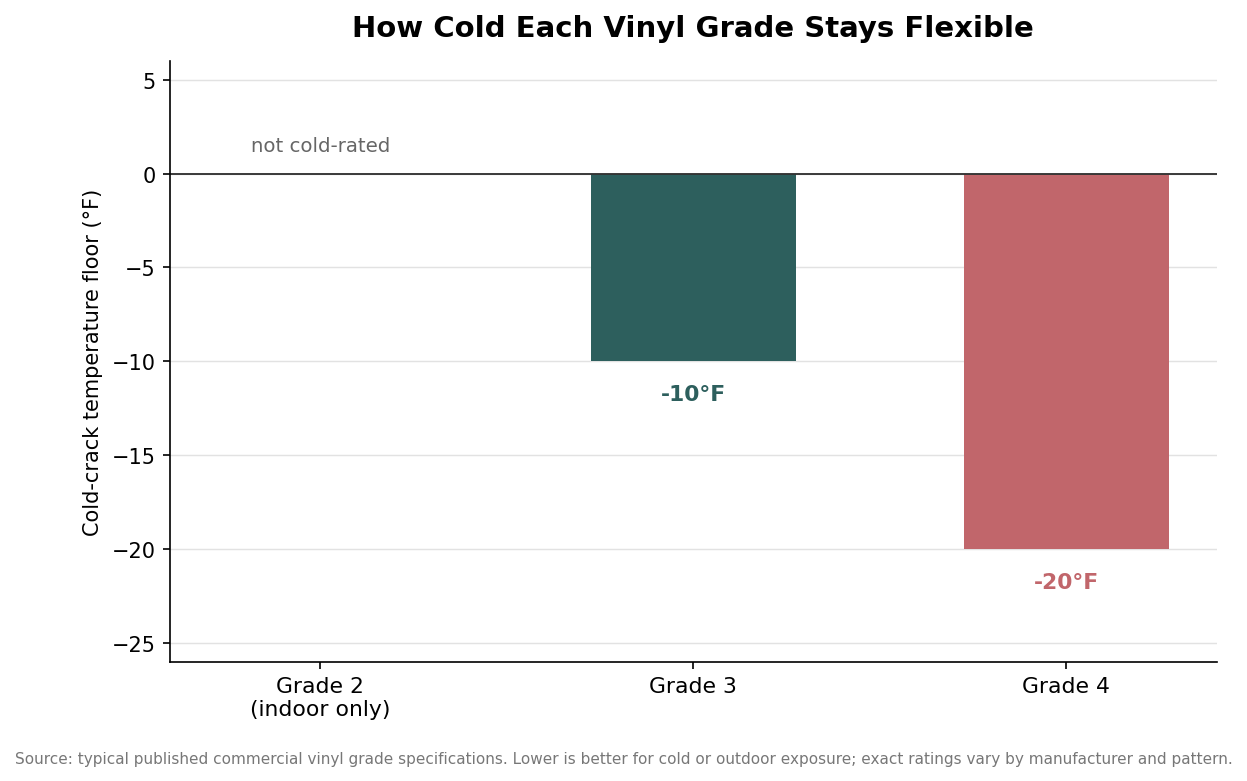
Vinyl is the workhorse of hospitality seating because it survives spills and wipes clean in one pass. Most commercial vinyls are graded, and a common framework runs from Grade 2 to Grade 4. Grade 2 starts around 50,000 double rubs, is the budget choice, and is best kept to indoor, light-to-medium traffic. Grade 3 is the sweet spot for most bars and restaurants: roughly 100,000 double rubs, typically bleach-cleanable and antimicrobial, with cold-crack resistance down to about minus 10 degrees Fahrenheit and strong colorfastness. Grade 4 climbs from 100,000 into the seven figures depending on the pattern, adds cold-crack tolerance to around minus 20 degrees, and carries the UV and moisture resistance that make it viable in sunrooms or covered patios.
The practical read is simple. If your stools live in a high-turnover dining room or a bar where drinks get set down on seats, specify Grade 3 as your baseline and only step up to Grade 4 where sunlight, temperature swings, or extreme traffic justify the premium. Stepping below Grade 3 to save a few dollars per stool is usually a false economy in a commercial room.
Faux leather and genuine leather: look versus upkeep
Faux leather, sold as PU or bonded leather, is chosen for a softer, more upscale hand than standard vinyl at a moderate price. The trade-off is longevity: polyurethane surfaces are prone to peeling and delamination under the constant sliding and abrasion of bar seating, and the cheaper bonded versions fail fastest. Faux leather earns its place in boutique or lounge settings where the look matters and traffic is moderate, but it is not the material to specify for a sports bar that turns tables all night.
Genuine leather is the premium option and feels like it, developing a patina that vinyl cannot imitate. It is genuinely durable when maintained, but it demands conditioning, dislikes standing moisture, and stains from spilled cocktails and food oils if not cleaned promptly. Reserve it for upscale venues with lower turnover and staff who will maintain it, and keep it away from wet-heavy service. In pure cost-per-year of hard use, a Grade 3 vinyl usually beats genuine leather in a busy room, which is why so many high-end operators still choose a premium vinyl that looks like leather.
Wood, metal, and poly: when no upholstery wins
Hard seats skip the abrasion question entirely. A solid wood seat, well finished, wipes clean, resists the peeling and staining that plague upholstery, and reads as warm and classic. The cost is comfort: without a cushion, wood is a shorter-sit material, which is fine for high-turnover counters and cafes and less ideal where guests linger. Metal seats, typically steel or aluminum, are close to indestructible and shrug off abuse, spills, and weather, which is why they dominate industrial-look bars and outdoor use; they too are a hard, cool surface better suited to shorter sits. Poly or resin seats split the difference for outdoor and poolside settings, resisting UV and moisture at a low-to-moderate price while tolerating rough handling.
For any outdoor or damp environment, the seat material conversation is really a frame conversation too. Powder-coated steel resists corrosion well indoors and in covered outdoor use; for exposed patios, aluminum or stainless framing avoids the rust that will eventually undercut even a perfect seat. Match the frame finish to the exposure or the stool will fail from the legs up regardless of what you sit on.
Matching the seat to the room
Put the materials against your actual service and the choice narrows quickly. A high-volume bar or restaurant that turns seats constantly and mops up spills nightly wants Grade 3 commercial vinyl: it hits roughly 100,000 double rubs, cleans with bleach solution, and forgives abuse. A boutique lounge or upscale dining room with slower turnover can justify faux or genuine leather for the look, accepting the higher upkeep, or hedge with a premium leather-look vinyl. A cafe, brewery, or high-turnover counter where sits are short and durability trumps plushness is a natural home for wood or metal, which never peel and barely age. An outdoor or poolside bar points to metal, poly, or a Grade 4 vinyl over a corrosion-resistant frame.
Two habits separate buyers who get this right. First, ask for the double-rub rating in writing rather than accepting the word commercial, which is unregulated; a real spec sheet will list a number. Second, request a swatch or seat sample and abuse it: wipe it with your cleaning chemicals, set a cold glass on it, flex it. The seat surface is where a stool lives or dies, and ten minutes with a sample tells you more than any product photo about how it will look after a year of your particular room.